Why Granite is the Ideal Material for Precision Machine Components: A Technical Analysis
Introduction
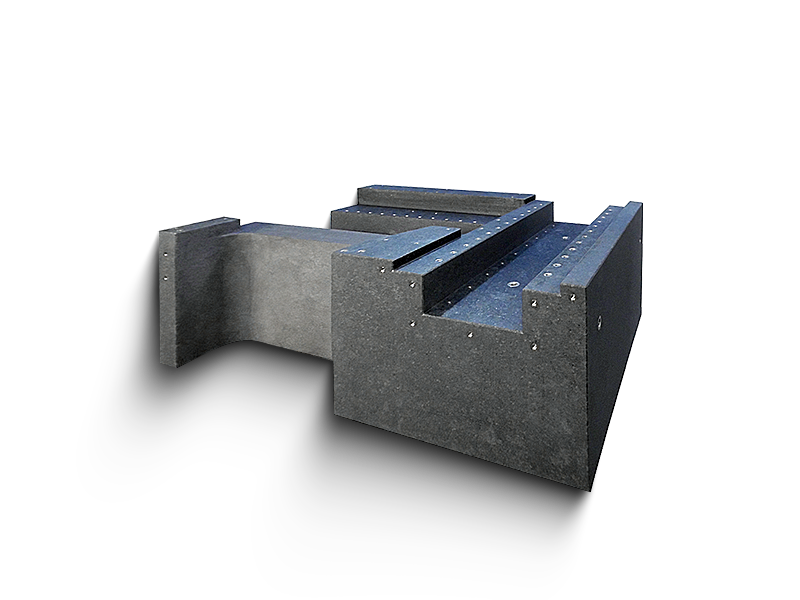
In high-precision manufacturing, material selection directly impacts equipment performance. Granite, a natural igneous rock, has emerged as a critical material for granite machine components and granite mechanical components, dominating applications from semiconductor lithography to aerospace metrology. This article explores the scientific rationale behind granite’s superiority, backed by industrial data and technical benchmarks.
Section 1: Unique Properties of Granite
1.1 Dimensional Stability
Thermal Expansion Coefficient: 4.5×10⁻⁶/°C (80% lower than steel)
Hysteresis Effect: <0.2μm/m after 10,000 thermal cycles (per ISO 8512-2)
These properties make granite machinery parts ideal for environments with temperature fluctuations exceeding ±15°C.
1.2 Vibration Damping
Natural damping ratio: 0.012–0.015 (vs. 0.001 for cast iron)
Vibration attenuation: 95% at 50–500Hz frequencies
This explains why granite equipment parts outperform metals in CNC machining centers reducing tool chatter by up to 40%.
1.3 Chemical Resistance
pH stability range: 1–14
Zero corrosion in coolants/hydraulic oils (ASTM C880 tested)
Industrial granite parts thus achieve 3× longer service life in chemical processing plants.
Section 2: Comparative Performance Analysis
2.1 Material Benchmarking
| Property | Granite | Cast Iron | Aluminum |
|---|---|---|---|
| Thermal Deformation | ★★★★★ | ★★☆☆☆ | ★☆☆☆☆ |
| Vibration Absorption | ★★★★★ | ★★☆☆☆ | ★☆☆☆☆ |
| Maintenance Cost | ★★☆☆☆ | ★★★★☆ | ★★★☆☆ |
| Corrosion Resistance | ★★★★★ | ★★☆☆☆ | ★★★☆☆ |
2.2 Cost-Benefit Over 10 Years
A 2023 ASME study showed granite structural components deliver 27% lower total ownership costs versus steel-aluminum hybrids in precision grinding machines.
Section 3: Manufacturing Processes
Modern precision granite components require 7-stage processing:
Quarry Selection
Only Class-A granite (ASTM C615) with <0.05% quartz variance
Stress Relieving
6-month natural aging + 72hr thermal cycling at 80°C
5-axis milling with ≤±0.01mm positional accuracy
Surface Grinding
Diamond-wheel polishing achieving Ra 0.1–0.4μm
Laser Calibration
Renishaw XL-80 interferometry for flatness verification
Sealant Treatment
Nanoporous silicone impregnation (water absorption <0.01%)
Final Inspection
21-parameter QA per ISO 8512-2/ANSI B89.3.7
Section 4: Industrial Applications
4.1 Semiconductor Manufacturing
Photolithography Stages (granite metrology components)
Achieve 0.12nm vibration isolation for EUV lithography (ASML NXE:3600D)
4.2 Precision Machining
CNC Machine Bases (granite machine bases)
Reduce thermal drift error by 60% vs. polymer-concrete bases
4.3 Metrology Systems
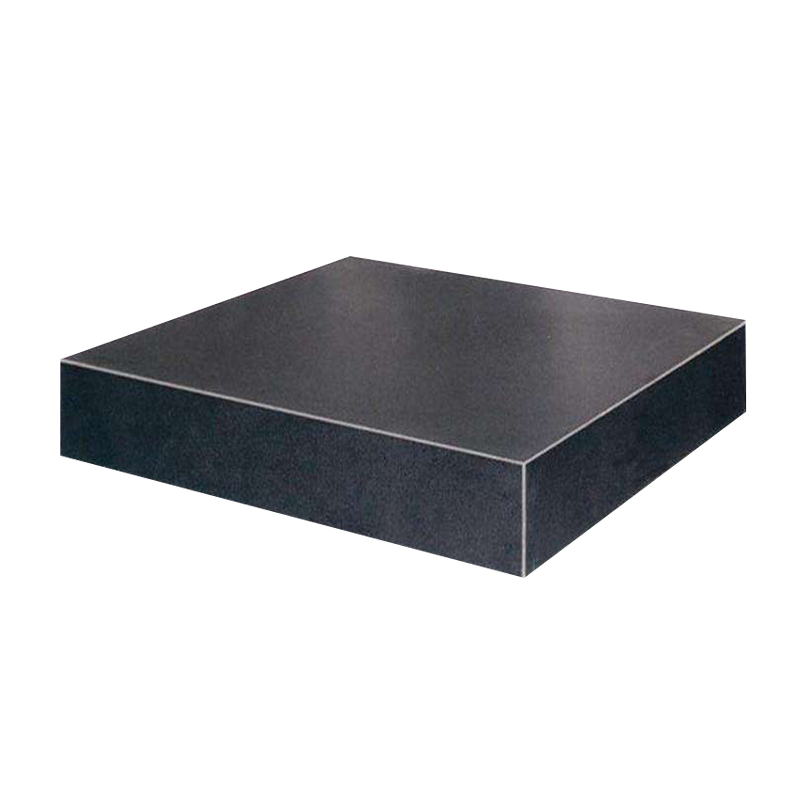
CMM Granite Plates (granite base plates)
Maintain 0.5μm/m² flatness for 15+ years (Hexagon Global Classic)
Section 5: Selection Guidelines
When sourcing granite mechanical components:
Certifications
Mandatory: ISO 8512-2 flatness certification
Recommended: NIST-traceable calibration reports
Precision Grades
Grade Flatness Tolerance Typical Use Case Commercial ±0.02mm/m² Woodworking CNC Precision ±0.005mm/m² Automotive Tooling Ultra-High ±0.0015mm/m² Optical Alignment Systems Supplier Checklist
Minimum 10 years of granite machining experience
On-site laser calibration capabilities
Custom mounting interface design support
Section 6: Market Trends
The global granite machine components market is projected to grow at 6.8% CAGR (2023–2030, Grand View Research), driven by:
Semiconductor Expansion: 78 new 300mm fabs under construction (SEMI 2023 Report)
EV Manufacturing: 220% increase in battery module alignment systems
Quantum Computing: Sub-micron stability demands for cryogenic chambers
Conclusion
From granite structural components in particle accelerators to granite equipment parts in watchmaking CNC, this ancient material continues to enable modern precision. As industries push toward submicron tolerances, granite remains unmatched in delivering thermal stability, vibration damping, and cost-effective longevity.