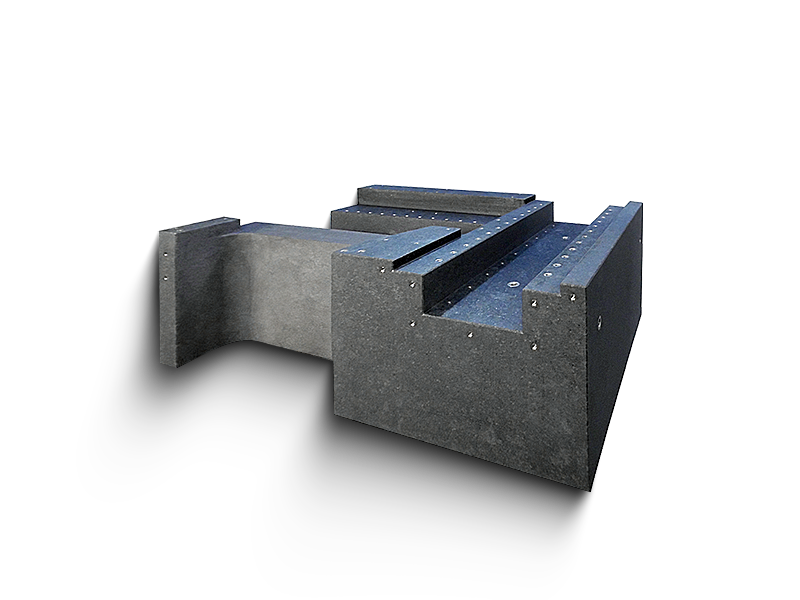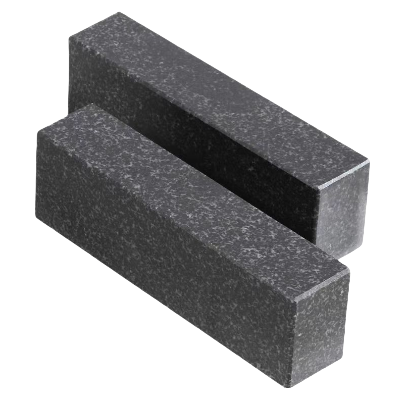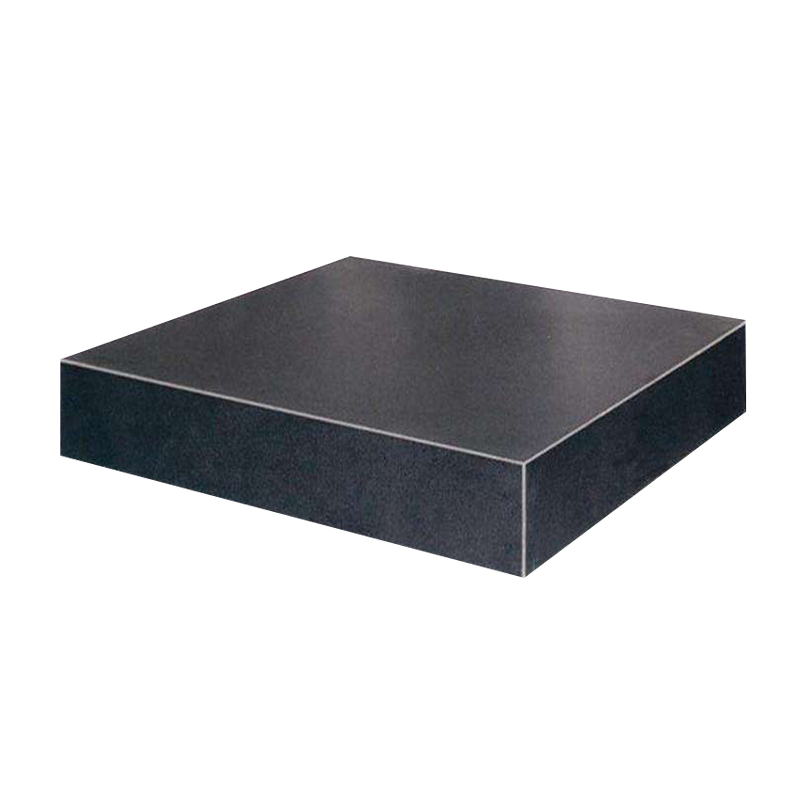
I. Roughness of Granite Mechanical Components
Roughness is a critical indicator for measuring the microscopic geometric deviations on the surface of granite mechanical components. It reflects the height and spacing of tiny peaks and valleys on the component’s surface. For granite machine parts, controlling roughness is essential, as it directly impacts friction performance, sealing efficiency, fatigue strength, and corrosion resistance.
The working surface roughness of granite mechanical components is typically required to be very low. According to industry standards, the maximum allowable surface roughness (Ra) generally ranges between 0.32–0.63 microns. This range ensures minimal friction coefficients, excellent sealing performance, and enhanced efficiency and stability of mechanical systems. Additionally, lower roughness reduces surface wear and corrosion, extending the component’s service life.
During machining, factors such as tool sharpness, cutting speed, feed rate, and coolant application significantly affect roughness. Strict control of these parameters is necessary to meet the stringent roughness requirements for precision granite components like granite surface plates, guideways, and measurement tools.
II. Glossiness of Granite Mechanical Components
Glossiness measures a granite component’s ability to reflect light, indicating surface smoothness and mirror-like quality. For industrial granite components, glossiness is equally vital, as it influences aesthetic appeal and visual consistency.
Granite mechanical components typically exhibit a dark, natural luster due to their mineral composition and dense structure. Through advanced grinding and polishing techniques, glossiness can be further enhanced, achieving a sleek, high-gloss finish. High-gloss granite components not only improve visual appeal but also boost corrosion resistance and durability, ensuring long-term performance in harsh environments.
However, excessively high glossiness may reduce friction or sealing effectiveness in specific applications. Therefore, glossiness levels must be tailored to the component’s functional requirements, such as in precision granite guide rails or optical measurement platforms.
III. Factors Affecting Roughness and Glossiness of Granite Components
Beyond machining parameters, factors like granite hardness, coolant type, equipment precision, and environmental stability influence surface quality. To optimize roughness and glossiness, manufacturers employ strategies such as:
- Advanced CNC machining for consistent tool paths
- Diamond-tipped tools for precise cutting
- High-viscosity coolants to minimize thermal deformation
- Laser-guided polishing for uniform surface finishes
Regular quality inspections using profilometers and gloss meters ensure compliance with standards like ISO 1302 or ANSI B46.1. For industries requiring ultra-precision, such as semiconductor manufacturing or aerospace, granite components with Ra ≤ 0.16 microns and glossiness ≥ 85 GU (gloss units) are often specified.
Conclusion
Roughness and glossiness are pivotal quality metrics for granite machine parts, including granite surface plates, coordinate measuring machine (CMM) bases, and optical benches. By leveraging precision machining technologies and rigorous quality control, manufacturers like [One Granite,One Pact] deliver high-precision granite components that meet demanding industrial standards. As a trusted granite component supplier, we specialize in custom solutions for metrology, automation, and high-stability applications, ensuring exceptional performance and longevity. Explore our range of ISO-certified granite machine parts for your next project!